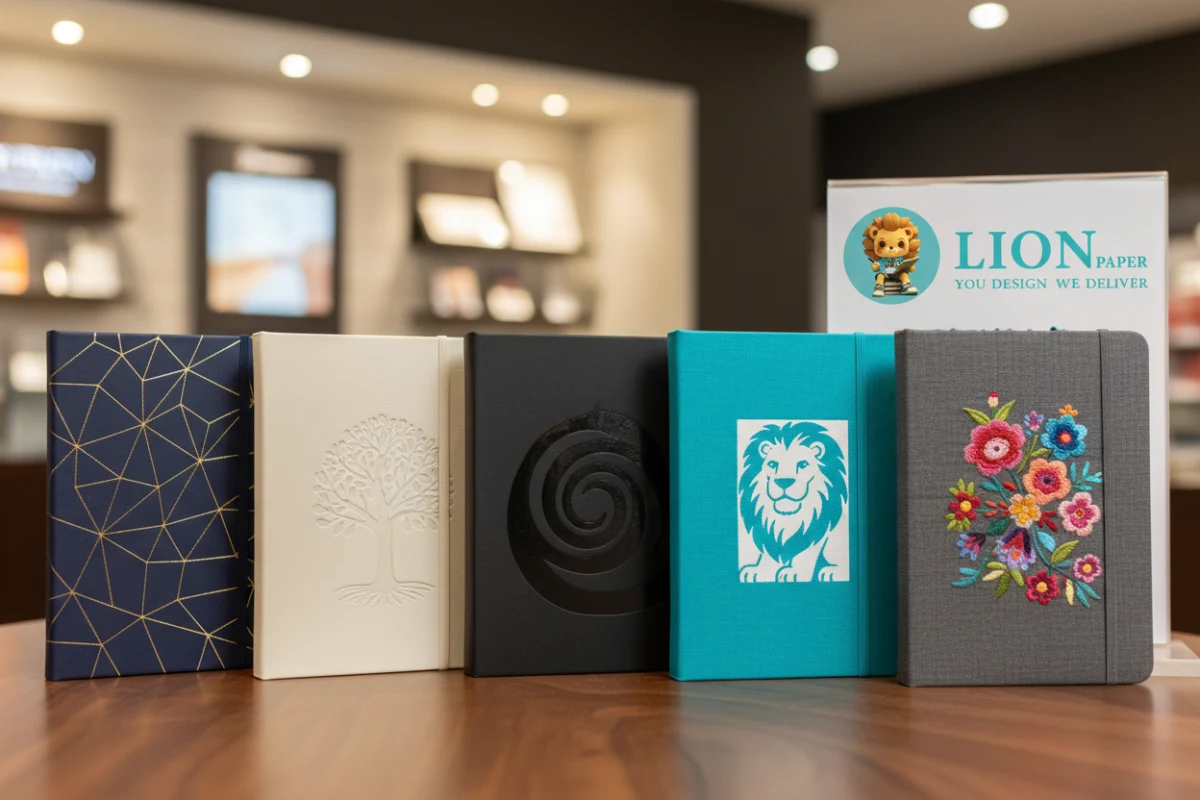
A Buyer's Guide to Custom Notebook Cover Finishes: Foil Stamping, Debossing, UV, Screen Printing, and Embroidery
Choosing the right custom notebook cover finishes depends entirely on your cover material, design complexity, and budget: foil stamping offers metallic luxury, debossing provides a classic tactile feel, spot UV adds a sleek modern contrast, screen printing delivers vibrant solid colors, and embroidery creates a premium, textured look on fabric-based covers.
What is Foil Stamping and How Does It Elevate Notebook Designs?
Foil stamping notebook cover customization uses heat, pressure, and a metal die to transfer a thin layer of metallic or colored foil onto the cover material. This method is highly favored by premium lifestyle brands, corporate gift buyers, and stationery retailers seeking an immediate upscale appearance.
Buyers can choose from classic gold and silver, rose gold, holographic, matte metallic, or even pigmented solid colors. Because it relies on a custom metal die (usually brass or magnesium), foil stamping is highly precise and works beautifully on PU leather, paperboard, and book cloth.
Key Benefits:
- High visual impact with genuine metallic reflectivity.
- Durable finish that resists fading over time.
- Compatible with a wide variety of base materials.
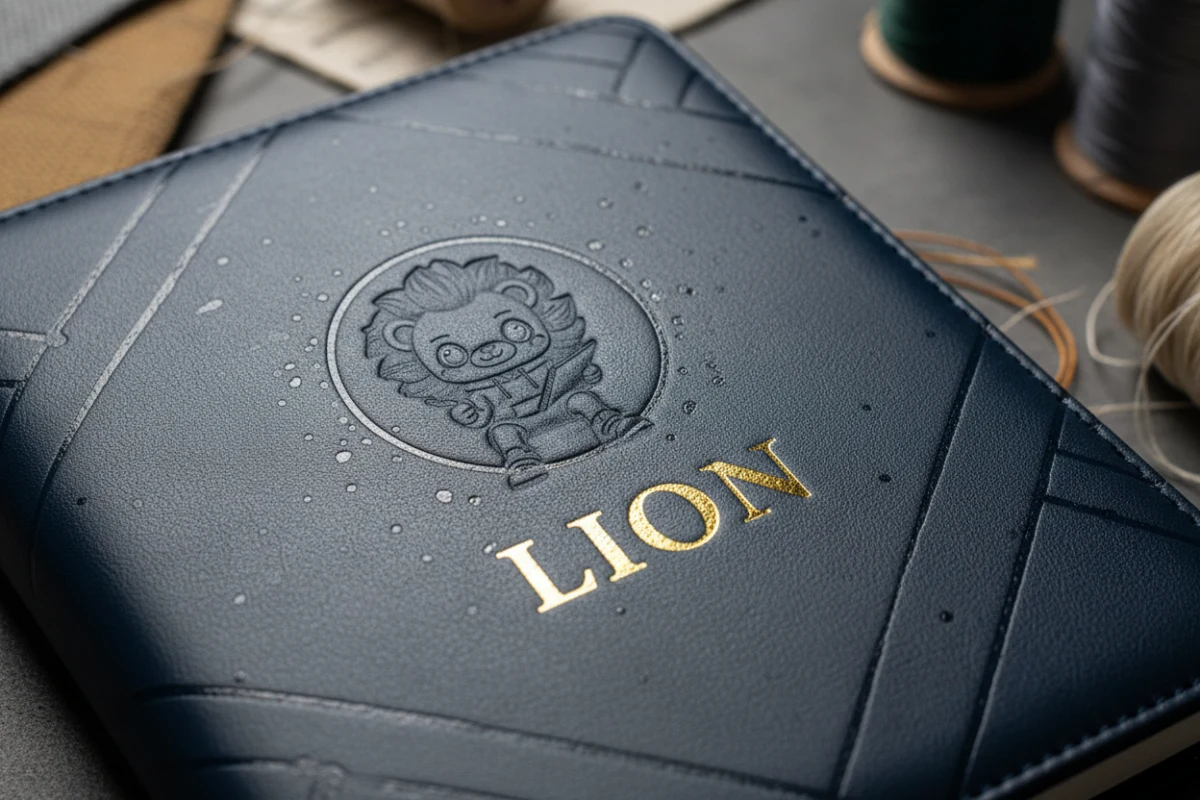 Combining foil stamping and blind debossing on high-quality thermo-reactive PU leather for a rich, tactile contrast.
Why Choose Debossing for a Classic, Tactile Cover Finish?
If your brand values minimalist luxury, debossed journal customization is the industry standard. Debossing presses a metal die into the cover material under high pressure and heat, creating a recessed, sunken impression of your logo or artwork. When performed without any color or foil, this is called "blind debossing."
For a contrasting effect, manufacturers can combine debossing with foil (foil debossing) or ink. However, blind debossing on high-quality thermo-reactive PU leather yields a natural color change (darkening) in the recessed areas, creating an exceptionally sophisticated, high-contrast look.
- Embossing vs. Debossing: While debossing presses into the cover, embossing raises the design above the cover surface. Embossing is best suited for paper-wrapped hardcovers, whereas debossing is highly recommended for PU leather and genuine leather journals.
When Should You Apply Spot UV to Stationery Manufacturing?
Spot UV is a liquid polymer coating applied to specific areas of the cover and then cured instantly under ultraviolet light. In spot UV stationery manufacturing, this technique is used to create a striking contrast between matte and high-gloss textures.
For the best results, spot UV is applied over a matte-laminated paper cover. The underlying matte surface absorbs light, while the spot UV areas reflect it brilliantly, making logos, patterns, or typography pop without adding colored pigments. It is an excellent choice for modern, artistic, and retail-ready planner covers.
How Do Notebook Screen Printing Methods Deliver Vibrant Graphics?
Unlike digital printing, notebook screen printing methods involve forcing thick ink through a stenciled mesh screen onto the cover. This method is unmatched when it comes to color vibrancy and opacity, especially when printing light-colored logos onto dark cover materials.
Screen printing is highly durable, water-resistant, and supports precise Pantone color matching. It is ideal for flat surfaces like heavy-weight paperboard, book cloth, and standard PU leather. It is especially cost-effective for medium-to-large production runs with designs utilizing 1 to 3 solid spot colors.
 Custom screen printing methods ensure vibrant, opaque colors even on dark cover fabrics.
Why Is Cover Embroidery Gaining Popularity in Premium Customization?
Embroidery brings an artisanal, high-end textile feel to custom notebooks. By stitching colored threads directly into the cover fabric, this finish is perfect for canvas, linen, denim, and premium book cloth covers. It appeals heavily to female-forward lifestyle brands and creator-led stationery lines.
Embroidery allows for multi-color designs with physical, raised thread textures. To ensure a clean finish, the embroidery is executed on the cover material prior to the final notebook assembly, ensuring all knots and backing materials are hidden securely inside the liner.
Which Cover Material Works Best with Each Finish Method?
Not all cover materials are compatible with every finishing technique. Selecting the wrong pairing can lead to poor adhesion, warping, or loss of detail.
| Finish Technique | Best Suited Cover Materials | Avoid Using On |
|---|---|---|
| Foil Stamping | PU Leather, Genuine Leather, Paperboard, Book Cloth | Highly textured, uneven fabrics |
| Debossing | Thermo-reactive PU Leather, Genuine Leather, Heavy Paperboard | Thin paper covers, highly textured fabrics |
| Spot UV | Matte Laminated Paper, Smooth Kraft Paper | Textured fabrics, untreated PU leather |
| Screen Printing | Book Cloth, Canvas, Smooth PU, Kraft Paper | Highly textured or embossed leathers |
| Embroidery | Canvas, Linen, Cotton Fabric, Thick Book Cloth | Thin paper, brittle or cheap plastics |
| Embroidery + Printing | Mixed Fabric (Canvas/Cotton base) | Glossy synthetic materials |
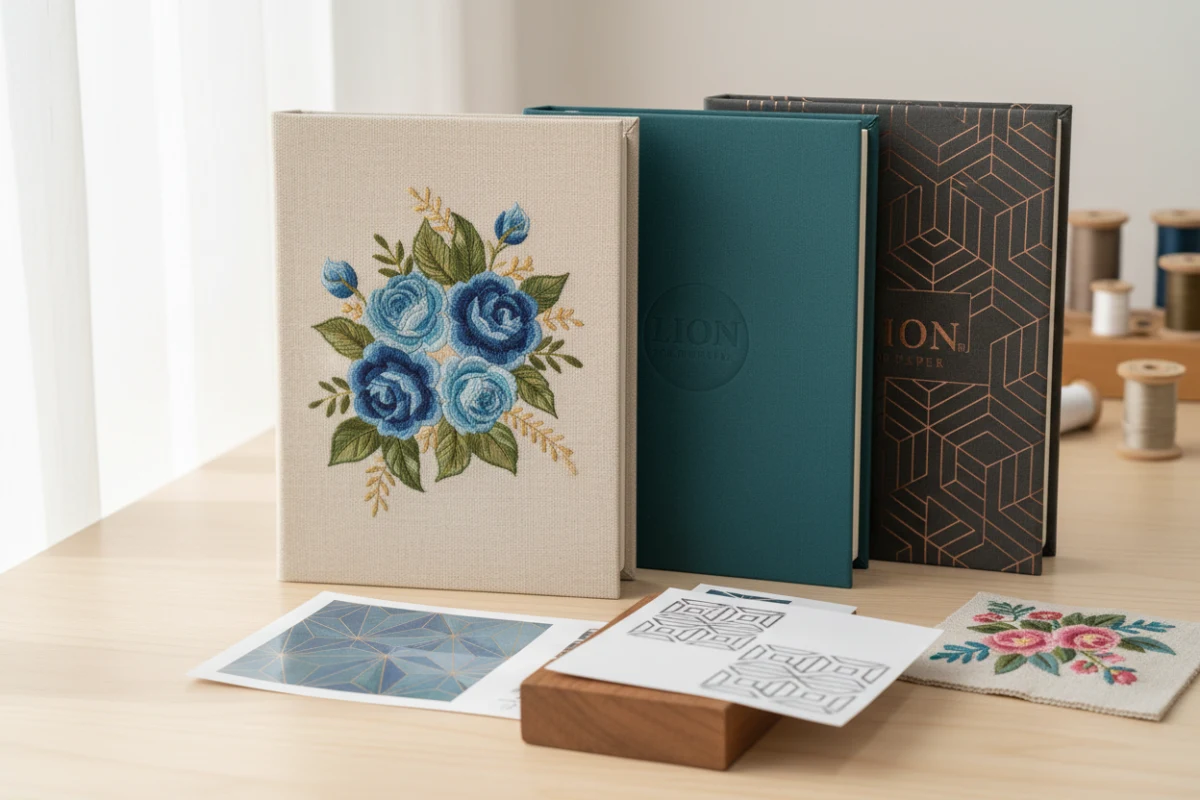 Premium cover embroidery adds an organic, artistic textile appeal to your notebook collection.
What Manufacturing Defects Should Buyers Watch Out For?
To maintain the highest quality standards, Lion Paper utilizes strict Quality Control (QC) SOPs, defect atlases, and AQL sampling. When evaluating your production samples, watch out for these common finish defects:
- Foil Flaking or Peeling: Occurs when temperature, pressure, or dwell times are incorrect during the stamping process.
- Halos or Bleeding: In screen printing, this happens if ink viscosity is too low, causing colors to blur past their defined boundaries.
- Uneven Depth: In debossing, inconsistent pressure across a large plate can cause the design to appear shallower on one side.
- Registration Shift: When combining multiple finishes (e.g., printing first, then foil stamping on top), alignment must be perfect. Even a 0.5mm shift can ruin the artwork's integrity.
How Do Finish Decisions Affect Production Costs and Lead Times?
Each finishing technique directly impacts your unit cost and total lead times. Because techniques like foil stamping and debossing require the creation of custom metal dies, they incur a one-time tooling mold fee but offer a very low unit cost for high-volume runs.
Conversely, embroidery and multi-color screen printing have lower initial setup costs but higher labor and processing time per piece, which can increase the overall unit price on smaller orders. To optimize your budget and logistics, it is vital to consult with your supply-chain partner during the initial design phase.
Ready to elevate your custom stationery project? Check artwork feasibility. and get expert feedback on your design's material compatibility.