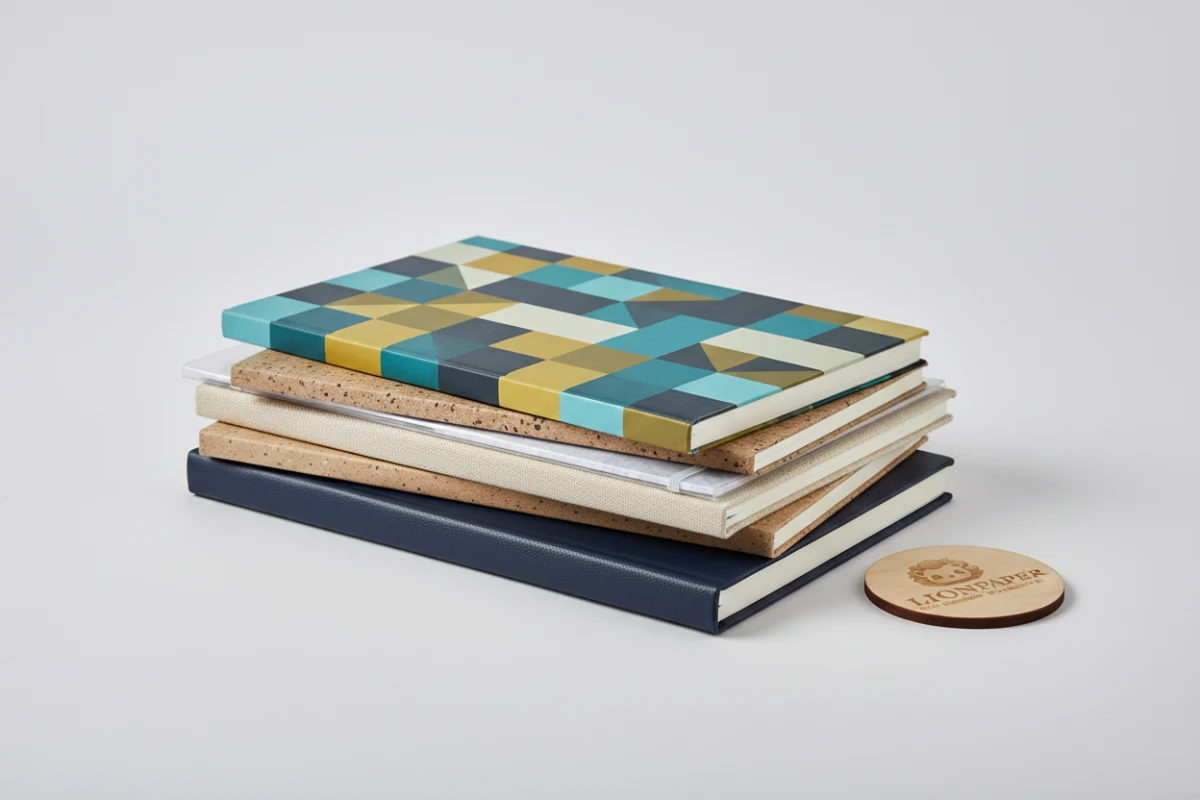
Custom Notebook Interior Design: A Roadmap for Stationery Brands
Choosing the right custom notebook cover material depends on balancing aesthetic appeal, durability, printing capabilities, cost, and sustainability to match your brand's target channel and buyer preferences. By matching the right cover stock—whether premium PU leather, versatile printed paper, tactile fabric, durable synthetics, or innovative eco-friendly options—to your specific audience, you can optimize your product design, control manufacturing costs, and elevate perceived retail value.
What are the Main Differences Between Custom Notebook Cover Materials?
Selecting the correct cover material impacts your notebook's texture, shelf appeal, and performance. Each material serves distinct market segments, from premium corporate gifts to mass-market retail stationery.
- PU Leather: Delivers a luxury, tactile feel that is perfect for corporate gifts, journals, and executive stationery.
- Paper and Board: Offers unlimited printing versatility, making it the primary choice for illustrated journals, spiral planners, and mass retail.
- Fabric & Textiles: Provides a warm, premium, and craft-oriented aesthetic highly sought after by lifestyle and boutique designer brands.
- PP and PVC: Focuses on high durability, water resistance, and utility, widely used for school, office, and field notebooks.
- Tyvek & Sustainable Materials: Targets eco-conscious consumers, offering tear-resistant, highly durable, and recyclable alternatives.
 PU leather covers offer exceptional depth and precision for debossing and foil stamping.
Why Choose PU Leather Notebook Covers for Premium Stationery?
PU leather notebook covers are the industry standard for mid-to-high-end journals and corporate gifts. Polyurethane (PU) leather mimics the look and feel of genuine leather while offering greater manufacturing consistency and lower costs.
PU leather allows for advanced customization techniques such as deep debossing, hot foil stamping, and colored edge painting. It is highly durable, water-resistant, and maintains its structural integrity over years of daily use. For brands targeting corporate clients, executive professionals, or premium retail channels, PU leather provides the high perceived value necessary to command premium price points.
How Do Custom Paper Notebook Covers Benefit Retail Brands?
If your brand relies on vibrant designs, custom illustrations, or rapid product launches, custom paper notebook covers wholesale options offer unmatched advantages.
Paper covers, typically made from high-density greyboard wrapped in art paper, kraft paper, or specialty textured cardstock, serve as a blank canvas. They support full-color offset printing, UV spot gloss, soft-touch lamination, and complex metallic foil designs. This versatility is ideal for annual planners, student notebooks, and fashion-forward journal lines where visual artwork drives purchasing decisions. Additionally, paper-based covers are highly cost-effective for large-volume production run-rates.
What Makes Fabric Notebook Covers Stand Out in the Market?
Fabric notebook cover manufacturing utilizes materials like natural linen, cotton canvas, bookbinding cloth, and woven textiles to create a distinctive, tactile experience.
Fabric-covered notebooks excel in the lifestyle, boutique, and creative designer segments. They convey an organic, handcrafted, and artistic quality that plastic or synthetic leather cannot replicate. While fabric covers require specialized gluing techniques to prevent fraying and demand careful handling during production, they can be beautifully customized with silk-screen printing, minimalist foil stamps, or delicate embroidery to create a highly collectible stationery piece.
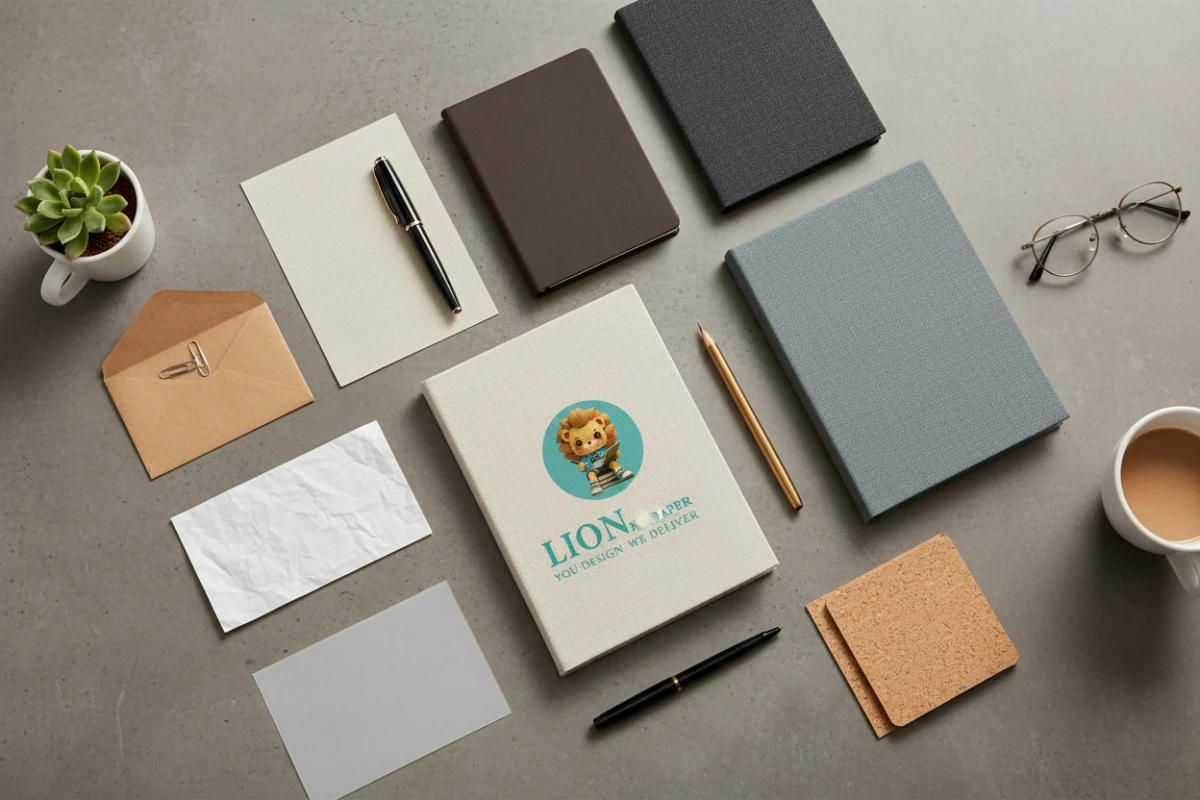 Fabric and linen materials bring a warm, tactile, and boutique aesthetic to stationery collections.
When Should Brands Consider PP, PVC, and Tyvek Materials?
For utility-driven and high-wear environments, synthetic materials like PP (Polypropylene), PVC, and Tyvek offer superior physical protection:
- PP & PVC: These semi-flexible, waterproof plastics are virtually indestructible. They protect the inner pages from spills, dirt, and tearing, making them excellent for student notebooks, laboratory logs, and outdoor field books.
- Tyvek: Made from high-density polyethylene fibers, Tyvek looks and feels like paper but is completely waterproof, tear-resistant, and lightweight. It provides a modern, industrial aesthetic that appeals to tech-forward brands and urban professionals.
What Sustainable and Eco-Friendly Notebook Cover Options Exist?
As global brands and retailers face stricter ESG requirements, choosing eco friendly notebook cover options has become a business priority. Modern sustainable covers reduce carbon footprints without sacrificing durability or style:
- FSC-Certified Board: Ensures paper fibers are sourced from responsibly managed forests.
- Recycled Kraft & Post-Consumer Waste (PCW) Board: Gives a rustic, raw, and organic look that immediately communicates environmental responsibility.
- RPET (Recycled Polyethylene Terephthalate): Converts ocean-bound plastic bottles into durable fabric covers for eco-conscious journal lines.
- Cork & Bamboo Veneers: Provide unique, naturally patterned surfaces that are fully biodegradable and highly tactile.
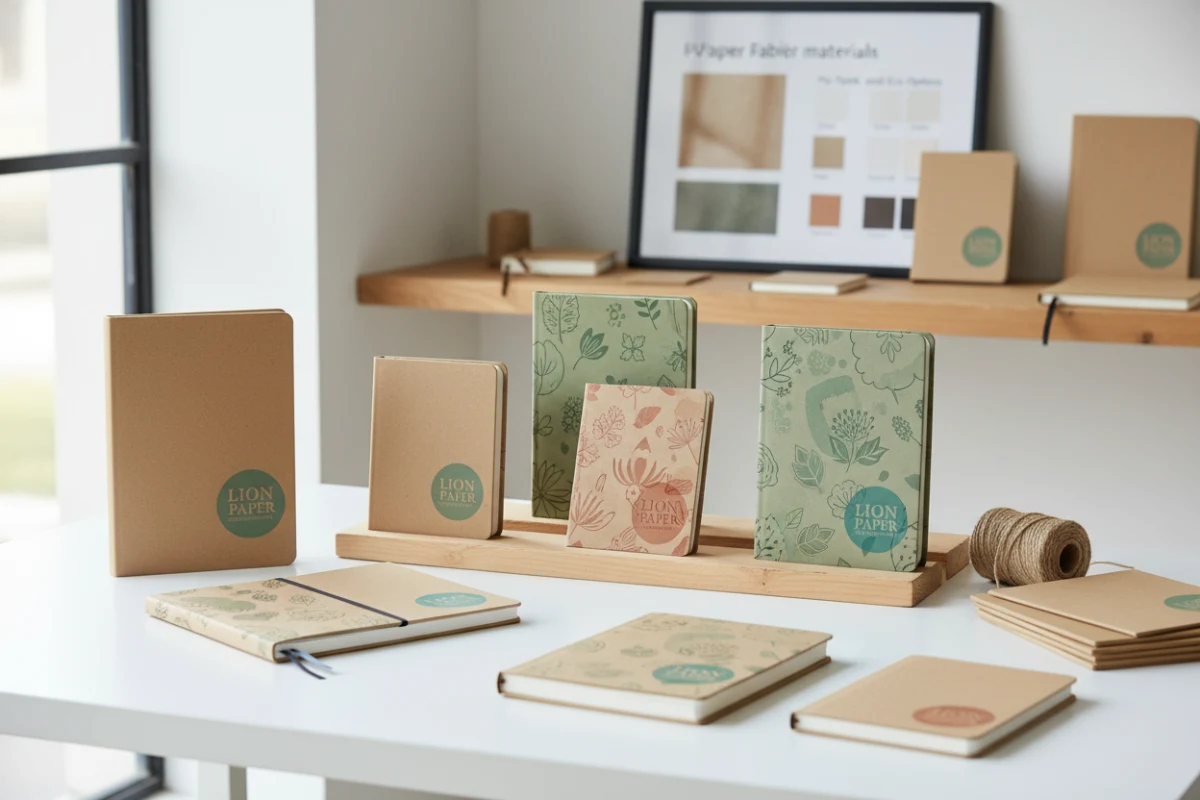 FSC-certified and recycled paper materials provide beautiful, earth-conscious cover designs.
Custom Notebook Cover Materials Comparison Table
To help you determine the optimal material for your next production run, this comparative table outlines key performance metrics, typical minimum order quantities (MOQ), and ideal target markets:
| Cover Material | Durability | Customization Options | Cost Level | Typical MOQ | Best-Fit Target Channel |
|---|---|---|---|---|---|
| PU Leather | Very High | Debossing, Foiling, Edge Painting | Medium to High | Moderate | Corporate Gifts, Executive Journals, Boutique Brands |
| Paper & Board | Medium | Full-color Printing, Spot UV, Matte/Gloss Lami | Low to Medium | Low | Mass Retail, Planners, Illustrated Notebooks, Amazon |
| Fabric / Linen | High | Embroidery, Screen Printing, Foil Stamping | High | Moderate to High | Lifestyle Brands, Gift Sets, Creative Stationery |
| PP / PVC | Excellent | Screen Printing, Die-cutting | Low | Low | School Stationery, Office Supplies, Field Notebooks |
| Tyvek | Exceptional | Printing, Textured Embossing | High | Moderate | Tech Brands, Modern Designers, Travel Notebooks |
| Eco Materials | Medium to High | Eco-friendly Inks, Blind Debossing | Medium to High | Moderate | ESG-focused Corporates, Eco-stationary Brands |
How to Select the Perfect Cover Material for Your Brand
When finalizing your custom notebook specification sheet, evaluate these three core operational factors:
- Sales Channel Compliance: If you are selling via Amazon, focus on lightweight paper or PP covers to minimize fulfillment fees. For major brick-and-mortar retail chains, ensure paperboard meets FSC certification requirements.
- Target Consumer Demographics: Premium executive buyers expect the weight and luxury feel of thick PU leather or bookbinding cloth, whereas students and office professionals prioritize the lightweight utility of PP or flexible paper covers.
- Landed Cost Targets: Balance your cover material selection with inner page paper weights and binding styles (such as thread-sewn casebound or twin-ring spiral) to maintain healthy retail margins.
At Lion Paper Products, we operate integrated manufacturing facilities in China and Cambodia to deliver design-led, high-capacity stationery solutions. Whether you require rapid prototyping in China or cost-effective mass production in Cambodia, our engineering team is ready to guide your material sourcing.
Ready to touch and test these materials yourself? Request cover material swatches today to start building your next bestseller.