
How to Choose Paper Weight for Custom Notebooks: 70gsm, 80gsm, 100gsm and Writing Performance
Choosing the right paper weight for custom notebooks involves balancing writing performance—such as bleed-through resistance and tactile feel—with production costs, typically selecting 70gsm for budget pocket notebooks, 80gsm for everyday writing, and 100gsm or higher for premium journals and ink pens.
Understanding Notebook Paper Weight: What Does GSM Mean?
In the notebook manufacturing industry, paper weight is measured in GSM, which stands for Grams per Square Meter. This metric defines the density and thickness of the paper. A higher GSM indicates a thicker, heavier sheet of paper.
When ordering bulk notebook manufacturing paper choices, selecting the appropriate GSM is the most critical decision affecting both the final product's tactile premium feel and the overall production cost.
Comparing 70gsm vs 80gsm vs 100gsm Paper Performance
Different paper weights serve distinct writing scenarios. Understanding how they compare helps brand owners and retailers target the right audience:
- 70gsm Paper: This is a lightweight, economical paper. It is highly flexible and keeps notebooks slim and lightweight. However, it offers limited opacity, meaning ink from the other side is often visible.
- 80gsm Paper: The global standard for everyday writing. It offers a balanced compromise between thickness, writing performance, and manufacturing cost. It is widely used in school notebooks, office stationery, and mass-market planners.
- 100gsm Paper: A premium, heavy-weight choice. It provides excellent opacity, a luxurious tactile stiffness, and handles a wide variety of writing instruments without warping. This weight is standard for high-end diaries, professional journals, and artistic sketchbooks.
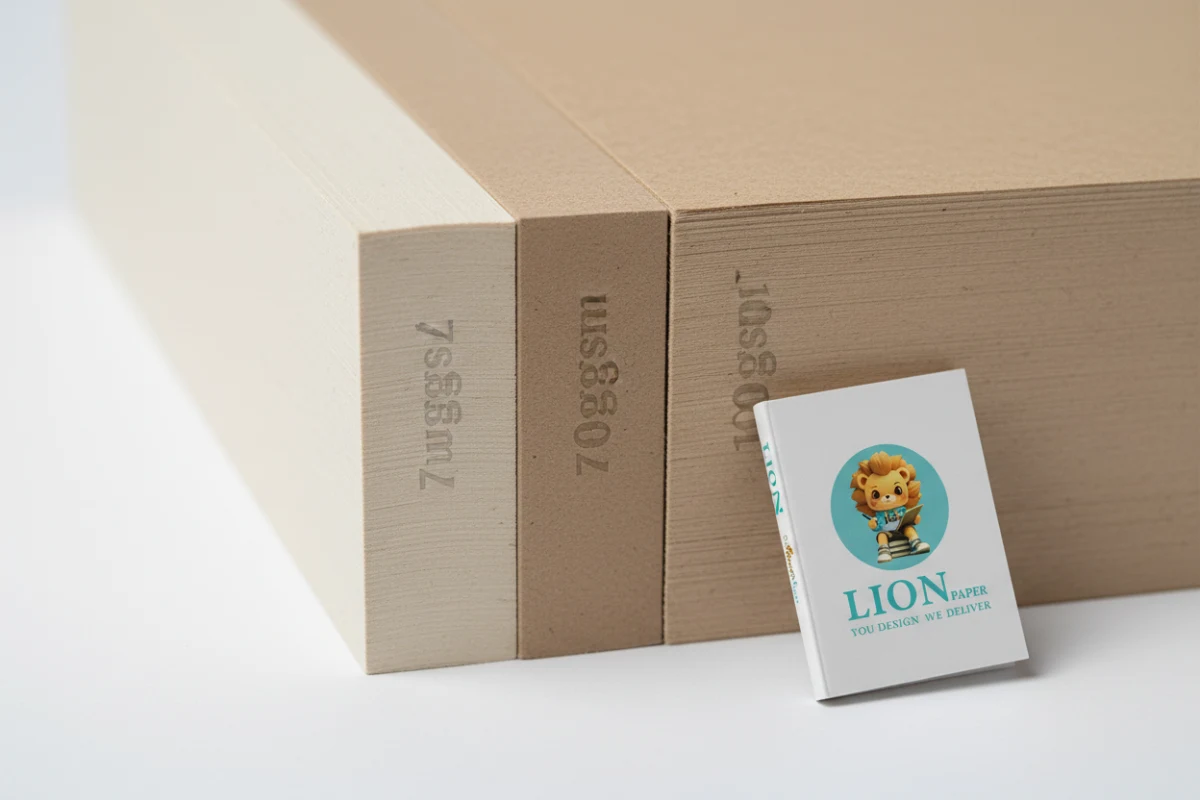 A physical thickness comparison of standard 70gsm, 80gsm, and 100gsm paper weights.
Writing Tools and Paper Compatibility: Preventing Bleed-Through
To prevent bleed-through custom journals must match the target user's preferred writing tools. Paper weight directly dictates notebook paper writing performance across different ink types:
| Paper Weight | Ballpoint Pen | Gel Pen | Fountain Pen | Highlighter / Markers |
|---|---|---|---|---|
| 70gsm | Good (No bleed) | Moderate ghosting | Heavy feathering & bleed | High bleed-through |
| 80gsm | Excellent | Minimal ghosting | Light feathering/ghosting | Moderate ghosting |
| 100gsm | Excellent | Perfect (No bleed) | Excellent (No bleed) | No bleed-through |
If your target market includes artists, bullet-journal enthusiasts, or professionals using fountain pens, upgrading to 100gsm or even 120gsm is highly recommended to eliminate feathering (where ink spreads along paper fibers) and ghosting (where writing is visible on the reverse side).
Paper Color and Texture: Cream, White, and Tactile Feel
Beyond weight, the color and texture of the paper interact with the GSM to define the writing experience.
- Wood-Free White Paper: Offers high contrast, making it excellent for multi-colored gel pens and highlighters. It feels smooth but can sometimes feel sterile.
- Eye-Care Cream/Off-White Paper: Highly preferred for premium journals and novel writing. The soft cream tone reduces eye strain during long writing sessions and naturally complements thicker 100gsm paper weights.
- Textured or Matte Finishes: Thicker papers (100gsm and above) can carry unique finishes like light tooth or high smoothness, enhancing the tactile feedback of pencils and fountain pens.
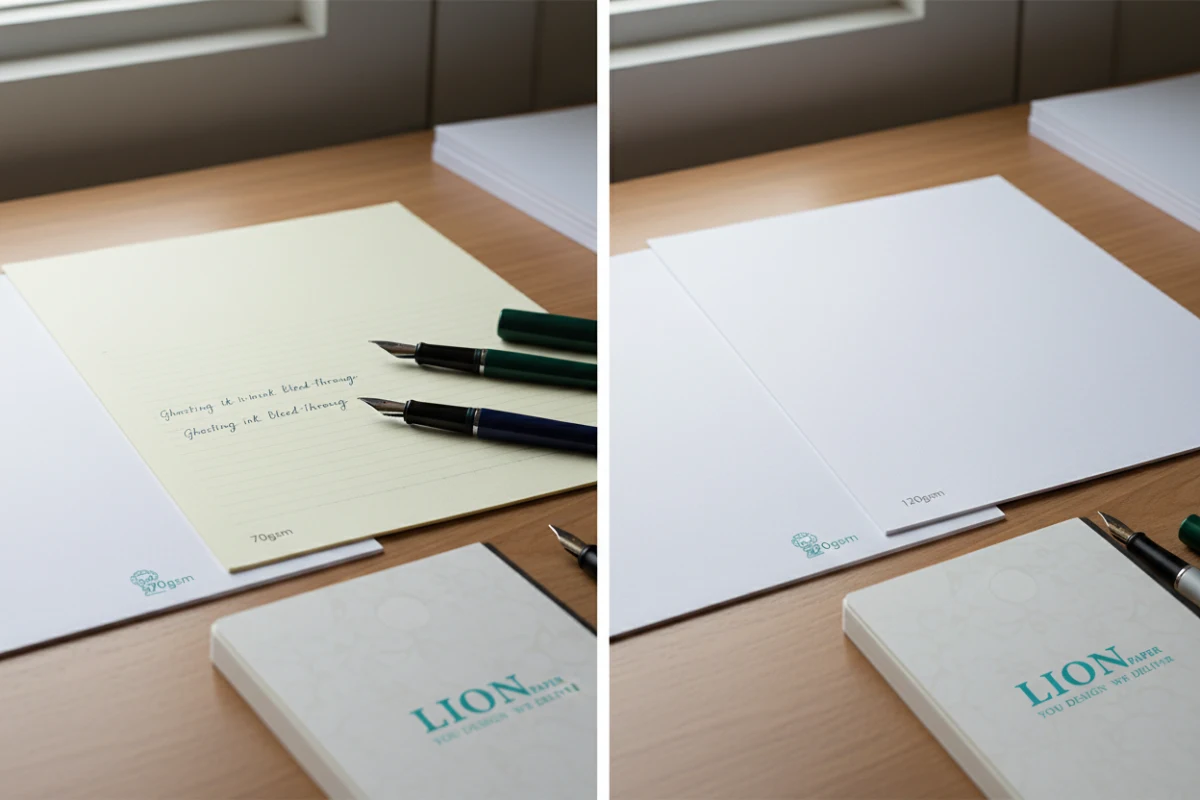 Choosing the correct GSM ensures outstanding notebook paper writing performance and eliminates ink ghosting.
Balancing Performance and Cost in Custom Notebook Manufacturing
When executing a bulk notebook manufacturing run, paper weight is one of the primary drivers of material costs and logistics fees.
- Material Cost: Moving from 80gsm to 100gsm paper increases the raw paper cost by approximately 20-25%.
- Shipping and Logistics: Thicker paper adds weight and volume to the final cargo. A shipment of 10,000 hardcover notebooks using 100gsm paper will weigh significantly more than the same order in 80gsm, directly impacting sea and air freight expenses.
- Binding Constraints: Thick paper limits the page count of certain binding types. For example, a perfect-bound notebook can easily hold 160 pages of 70gsm paper but might become too stiff or bulky with 100gsm paper.
How to Choose the Perfect Paper Weight for Your Target Audience
To make the right choice, align your custom notebook paper weight 70gsm 80gsm 100gsm selection with your specific customer segment:
- For Amazon & Online Retailers: 80gsm is the sweet spot. It minimizes international shipping weight while offering a reliable, everyday writing experience that keeps product reviews positive.
- For Premium Stationery & Lifestyle Brands: 100gsm or higher is essential. These customers expect a heavy, tactile feel and complete bleed-through prevention.
- For Promotional Gifts & Conferences: 70gsm or 80gsm works best. These notebooks are designed for quick note-taking, and keeping unit costs low is usually the priority.
- For Educational & School Suppliers: 70gsm to 80gsm spiral or wire-bound notebooks offer the durability students need at a price point that fits tight school budgets.
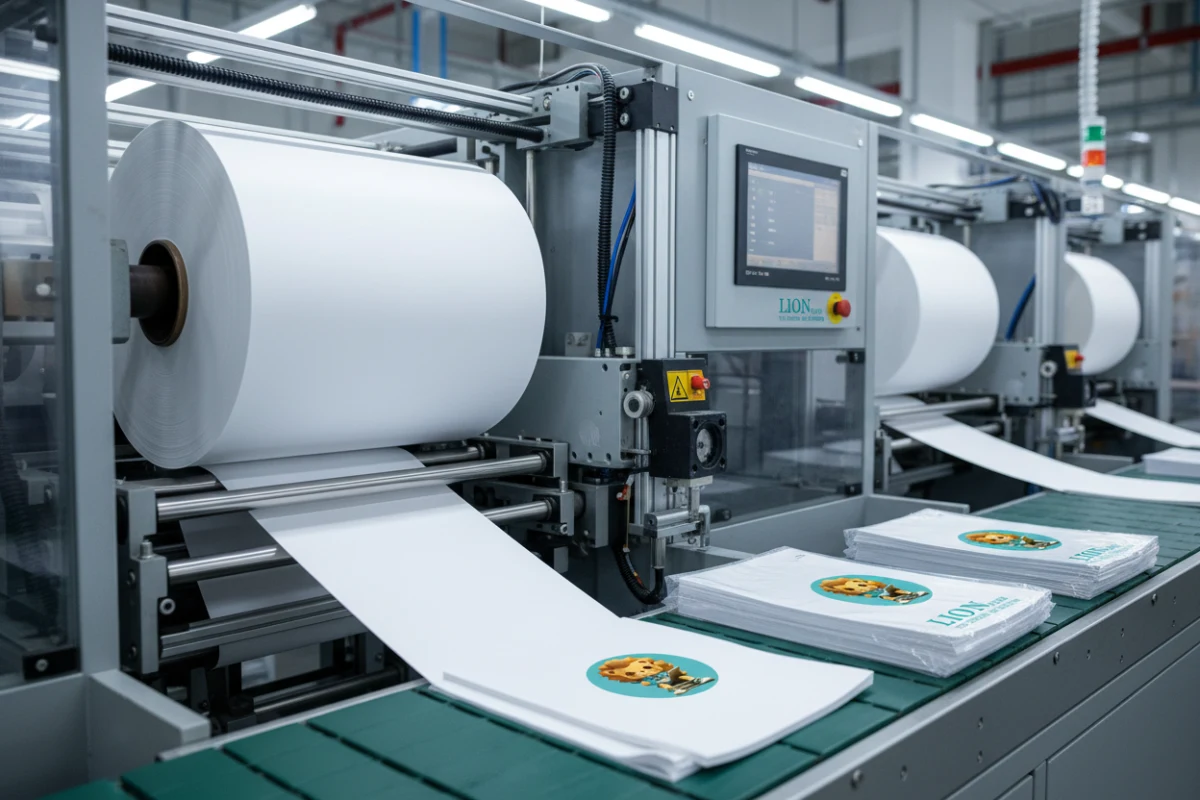 Lion Paper's automated production lines handle bulk manufacturing with reliable consistency.
Partner with Lion Paper for Tailored Custom Notebook Solutions
At Lion Paper Products, we understand that finding the perfect balance between paper texture, writing performance, and manufacturing budget is crucial for your brand's success. With our dual-site operations in China and Cambodia, we provide seamless rapid prototyping, FSC-certified eco-friendly paper sourcing, and efficient mass production.
Are you unsure which paper weight or material best matches your design? Upload your reference sample photo to receive paper substitution options and get expert recommendations from our structural design team today.